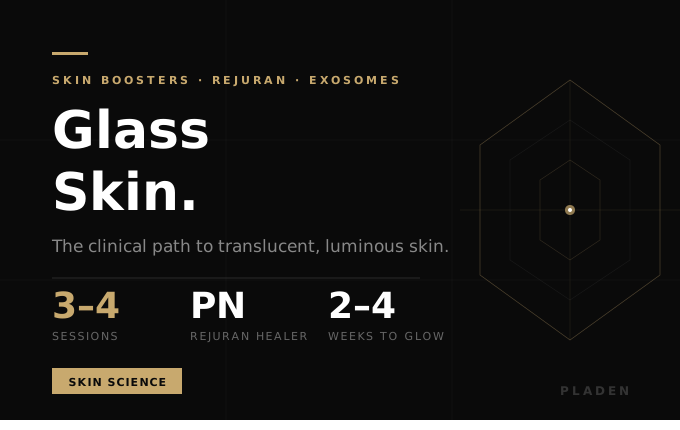
The global beauty industry is experiencing what some call "filler fatigue." Patients are moving away from volumizing injectables and toward treatments that make the skin itself look better — healthier, more hydrated, naturally luminous. This is the core of what Korea calls glass skin: a complexion so well-hydrated and clear that it appears translucent.
But achieving real glass skin isn't about products. It's about clinical treatments that repair and regenerate your skin at a cellular level. Here's how it works.
What Glass Skin Actually Means (and What It Doesn't)
Glass skin is not a makeup technique. It's a skin condition — a state where the skin barrier is so intact, hydration levels so optimal, and inflammation so minimal that the skin naturally reflects light evenly across its surface.
This is fundamentally different from the Western filler approach, which adds volume to change facial shape. Glass skin treatments don't reshape your face. They restore your skin's own ability to look radiant without any makeup or highlighter.
The clinical path to glass skin runs through a category of treatments called skin boosters — and Seoul is where this technology is most advanced.
💡 Skin Boosters vs. Fillers: Fillers are injected deep into tissue to add volume (cheekbones, jawline, lips). Skin boosters are micro-injected superficially across the entire face to hydrate, repair the skin barrier, and stimulate your own collagen production. The goal is skin quality, not facial reshaping.
How Skin Boosters Work: The Science
Skin boosters deliver active biological compounds directly into the dermis — the living layer of skin where collagen, elastin, and hyaluronic acid are produced. By bypassing the epidermis (which blocks most topical products), these treatments communicate directly with your skin cells.
Rejuran (Polynucleotide Therapy)
Rejuran Healer uses polynucleotides (PN) derived from salmon DNA to trigger your skin's natural repair mechanisms. The PN fragments act as biological signals, instructing fibroblasts to produce new collagen and improve wound healing at a cellular level. The result is improved skin elasticity, reduced fine lines, and a visible improvement in skin texture over 2–4 weeks.
Exosome Therapy
Stem cell exosomes are the newest generation of skin boosters. These nano-sized vesicles carry growth factors and signaling molecules that stimulate cellular regeneration. They're particularly effective for patients with compromised skin barriers or chronic dullness.
Why Pain Matters — and Why Most People Avoid Skin Boosters
Here's the uncomfortable truth: skin booster treatments like Rejuran involve dozens of micro-injections across the face. For many patients, the pain is the single biggest barrier to getting these treatments. Standard topical numbing creams reduce — but don't eliminate — the discomfort, which is why many first-time patients never come back for their second session.
This is an area where clinic technique matters enormously. At PLADEN, the approach to skin boosters was redesigned specifically around this problem. PLADEN's painless Rejuran and Retuo protocols use a combination of advanced numbing techniques and refined injection methods that significantly reduce discomfort during the procedure — making it realistic for patients to complete the full treatment course rather than abandoning it after one painful session.
💡 Why this matters clinically: Skin boosters deliver their full results over a series of 3–4 sessions. If pain causes patients to stop after session one, they never see the real outcome. Reducing the pain barrier isn't a luxury — it's what makes the treatment actually effective.
Combining Skin Boosters with Pore and Texture Treatments
For patients dealing with enlarged pores or rough skin texture alongside dullness, skin boosters alone may not be enough. The most effective approach combines boosters with radiofrequency (RF) microneedling devices like Potenza or Sylfirm X.
The microneedles create controlled micro-channels in the skin, allowing the booster ingredients to penetrate more deeply. Simultaneously, the radiofrequency energy heats the dermal tissue, tightening pore walls and stimulating additional collagen remodeling. The combination produces results that neither treatment achieves alone.
Brightening and Pigment Correction
For uneven skin tone, clinics often layer in targeted brightening protocols — delivering antioxidants, glutathione, and vitamin complexes directly into the dermis. This suppresses excess melanin production and brightens the overall complexion from within, rather than bleaching the surface.
Conclusion
Glass skin isn't a trend — it's a clinical outcome. By focusing on skin boosters that repair your skin at a cellular level, combined with pore-refining and brightening treatments, you can achieve the kind of translucent, naturally luminous complexion that no skincare routine alone can deliver.
The key factors that determine your results: the quality of the booster compounds used, the skill of the injecting physician, and — critically — whether the clinic's technique allows you to comfortably complete the full treatment course.