
If you've been researching skin treatments in Korea, you've probably encountered an overwhelming number of product names: Rejuran, Retuo, Juvelook, Exosomes, Profhilo, NCTF, Lenisna. They all fall under the category of "skin boosters" — but they work in fundamentally different ways, target different concerns, and produce different results.
This guide cuts through the marketing noise. Here's what each major skin booster actually does, how they compare, and how to choose the right one for your skin.
What Are Skin Boosters? The Category Explained
Skin boosters are injectable treatments designed to improve skin quality from within — not by adding volume or reshaping your face (that's what dermal fillers do), but by delivering active compounds directly into the dermis where your skin produces collagen, elastin, and hyaluronic acid.
Think of it this way: topical skincare works on the surface. Skin boosters work on the factory floor — the dermal layer where your skin's building blocks are manufactured. By delivering regenerative compounds directly to this layer, skin boosters can achieve results that no serum or cream can match.
The key categories of skin boosters in Korea include:
- Polynucleotide (PN)-based — Rejuran, Rejuran S, Lenisna
- PDRN-based — Retuo (Rétuo)
- Collagen-stimulating — Juvelook (polylactic acid + HA)
- Exosome-based — ASCE+, Exosome skin boosters
- HA bioremodeling — Profhilo, Volite
- Vitamin cocktails — NCTF, Filorga
Each uses a different mechanism to improve your skin. Let's break them down.
Rejuran (리쥬란): The Gold Standard of Korean Skin Boosters
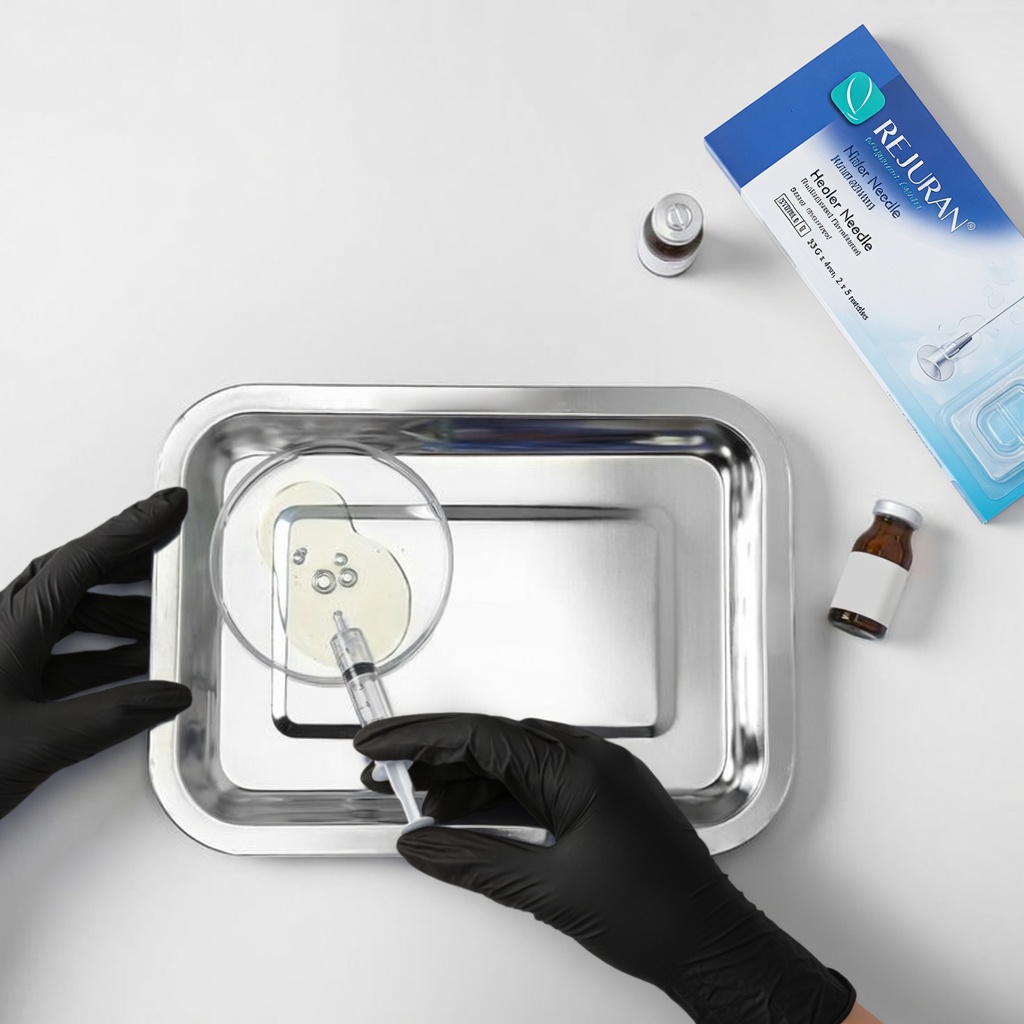
Rejuran Healer is arguably the treatment that defined the modern Korean skin booster category. Made from polynucleotides (PN) derived from salmon DNA, Rejuran works by sending biological repair signals to your fibroblasts — the cells responsible for producing collagen and elastin.
How It Works
Polynucleotide fragments act as cellular messengers. When injected into the dermis, they stimulate your skin's natural wound-healing response without actually creating wounds. Your fibroblasts interpret the PN fragments as signals to ramp up collagen produ
ction, improve blood microcirculation, and accelerate cellular turnover.
Best For
- Fine lines and early signs of aging
- Thin, dehydrated skin that lacks "bounce"
- Overall skin rejuvenation and elasticity improvement
- Under-eye hollowing and dark circles (Rejuran I — eye-specific formula)
The Rejuran Family
- Rejuran Healer — The original. Full-face skin rejuvenation.
- Rejuran S — Higher concentration formula designed for acne scars and textural irregularities.
- Rejuran I — Thinner formula specifically designed for the delicate under-eye area.
- Rejuran HB — Combined with hyaluronic acid for enhanced hydration alongside regeneration.
Typical protocol: 3–4 sessions, spaced 2–4 weeks apart. Results become visible around week 2–3 after each session and continue improving as collagen builds over the following months.
💡 The pain problem: Rejuran's biggest drawback has always been the injection process. The treatment involves dozens of micro-injections across the face, and even with topical numbing cream, many patients describe significant discomfort. This is the number one reason patients don't complete the full treatment course — and incomplete courses mean incomplete results.

Re2O (리투오): The PDRN Alternative
Re2O is a newer entrant in the Korean skin booster market that uses PDRN (polydeoxyribonucleotide) — a compound closely related to the polynucleotides in Rejuran, but with some key differences.
PN vs. PDRN: What's the Difference?
Both PN and PDRN are derived from DNA fragments and share regenerative properties. The primary difference is molecular weight and mechanism:
- PN (Rejuran) — Larger molecular fragments. Primarily stimulates fibroblast activity and collagen production through a wound-healing signaling pathway.
- PDRN (Retuo) — Smaller molecular fragments. Activates the A2A adenosine receptor, which has strong anti-inflammatory properties in addition to regenerative effects. This makes PDRN particularly effective for skin that's chronically inflamed or sensitized.
Best For
- Sensitive, reactive, or inflammation-prone skin
- Post-procedure recovery (accelerates healing after laser treatments)
- Rosacea-prone or redness-prone skin types
- Patients who want regeneration + calming effects in one treatment
Retuo has gained popularity rapidly in Korea specifically because of its dual action: it regenerates and calms simultaneously. For patients whose skin is too reactive for aggressive treatments, PDRN offers a gentler path to improvement.
Juvelook: Collagen Stimulation from a Different Angle
Juvelook takes a completely different approach from PN/PDRN boosters. It combines polylactic acid (PdLLA) with hyaluronic acid to create a dual-action treatment: immediate hydration from the HA, plus long-term collagen stimulation from the polylactic acid.
How It Works
Polylactic acid is a biocompatible, biodegradable polymer that's been used in medicine for decades (it's the same family of compounds used in dissolvable sutures). When injected into the dermis, the micro-particles create a controlled, low-level inflammatory response that triggers your body to produce new collagen around the particles as they gradually dissolve over 12–24 months.
Best For
- Volume loss and skin thinning (especially in the mid-face)
- Deep wrinkles and nasolabial folds
- Patients who want structural improvement, not just surface glow
- Longer-lasting results (collagen building continues for months after injection)
Juvelook vs. Rejuran
These two are often compared, but they serve different purposes. Rejuran excels at skin quality improvement — texture, elasticity, radiance. Juvelook excels at structural restoration — rebuilding lost volume and deep collagen support. Many Korean clinics recommend combining both for a comprehensive anti-aging approach.
Exosome Skin Boosters: The Next Generation
Exosome therapy represents the cutting edge of regenerative skin treatment. Exosomes are nano-sized vesicles (30–150nm) secreted by stem cells, packed with growth factors, signaling proteins, and genetic material that instruct your skin cells to regenerate.
How They Work
Think of exosomes as delivery packages from stem cells. They carry concentrated regenerative instructions — growth factors like EGF, FGF, and VEGF — directly to your skin cells. When these packages arrive, your cells interpret them as powerful repair signals and respond by accelerating collagen synthesis, improving cellular turnover, and strengthening the skin barrier.
Best For
- Compromised skin barriers (chronic dryness, sensitivity)
- Dull, tired-looking skin that doesn't respond to other treatments
- Post-laser recovery and enhanced healing
- Patients looking for the most advanced regenerative option available
Exosome treatments are often combined with other skin boosters (Rejuran + Exosome, for example) or used as a post-laser recovery accelerator. The technology is evolving rapidly, and Korea is at the forefront of clinical application.
Other Notable Skin Boosters
Profhilo
An HA (hyaluronic acid) bioremodeling treatment from Italy that's gained a strong following in Korea. Unlike traditional HA fillers, Profhilo uses a unique hybrid cooperative complex of high and low molecular weight HA that spreads naturally under the skin, providing deep hydration and mild collagen/elastin stimulation. Best for overall skin laxity and hydration in patients over 35.
NCTF / Filorga
A vitamin cocktail approach — NCTF delivers 59 active ingredients (vitamins, amino acids, minerals, coenzymes) directly into the dermis. Think of it as an intensive nutrient infusion for your skin. Best for dull, nutrient-depleted skin and as a maintenance treatment between more targeted boosters.
Lenisna
A newer PN-based booster similar to Rejuran but with a different molecular structure. It's gaining traction in Korea as an alternative for patients who want polynucleotide-based regeneration with a potentially different injection experience.
How to Choose: A Comparison Framework
In practice, many Korean clinics don't choose just one. The most effective protocols often combine multiple boosters — for example, Rejuran for overall regeneration plus Juvelook for deep collagen building, or Retuo plus Exosomes for sensitive skin that needs both calming and repair.

The Pain Factor — and Why It Matters More Than You Think
Here's something that rarely gets discussed in skin booster marketing: pain compliance. Most skin boosters require 3–4 sessions to deliver full results. But studies consistently show that a significant percentage of patients abandon their treatment course after 1–2 sessions — and the primary reason is discomfort during the injection process.
This means that even the most advanced skin booster in the world is only as good as the patient's ability to complete the full course. An incomplete course means incomplete results — and often, wasted investment.
At PLADEN, this problem is treated as a clinical priority, not an afterthought. PLADEN's painless Rejuran and Retuo protocols use a combination of advanced numbing techniques and refined injection methods specifically designed to reduce the discomfort barrier. The goal is straightforward: if the patient can comfortably complete all sessions, the treatment can deliver its full potential.
💡 Practical reality: The "best" skin booster for you isn't necessarily the one with the most impressive science — it's the one you can actually complete the full course of. Pain management during injection is a clinical skill that varies enormously between clinics, and it directly affects your outcome.
Conclusion
The Korean skin booster landscape is more diverse and advanced than anywhere else in the world. From PN-based regeneration (Rejuran) to anti-inflammatory PDRN therapy (Retuo), collagen-building polymers (Juvelook), and cutting-edge exosome treatments — the options are extensive and genuinely effective.
The key to choosing the right booster is understanding what your skin actually needs: regeneration, calming, structural support, or barrier repair. Often, the best approach is a customized combination designed around your specific skin condition — not a one-size-fits-all protocol.
Whatever booster you choose, two factors will determine your results more than anything else: the treating physician's expertise in designing the right protocol, and whether the clinic's technique allows you to comfortably complete the full treatment course.